The search landscape is moving faster than ever, and the question on every marketer’s mind is Will Google use more AI models for ranking in the coming years? If we look at the rise of Google’s AI, the consistent development of Large Language Models (LLMs) in search, and Google’s shift toward Google Search Generative Experience (SGE), the answer seems clear AI is reshaping SEO, and the transformation is only accelerating.
As we move closer to the next era of search, it’s important to understand how AI based systems are evolving, what this means for organic rankings, and how businesses can adapt. In this blog, we’ll explore 7 SEO predictions for 2026, the 5 key factors to rank in AI search, and how local businesses should prepare through strategic Local SEO prediction insights.
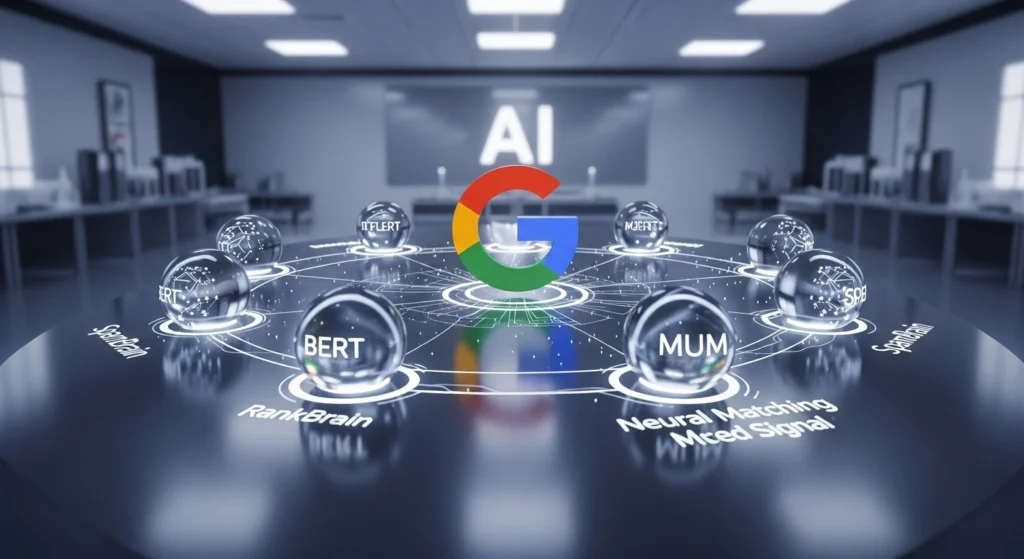
Artificial intelligence is no longer just a background tool for Google, it’s the backbone of modern search. Over the last few years, Google has introduced,
This evolution is driven by Google’s focus on understanding search context at a deeper level. Traditional keyword matching is fading, and AI’s capability to understand meaning, user behavior, and relevance is taking center stage.
With this shift, it’s safe to predict that Google AI ranking predictions will play a major role in future SEO strategies.
Here’s what SEO professionals should prepare for as AI takes over more of the ranking process:
AI allows Google to tailor results based on search history, intent, and location. Two users searching for the same keyword may see completely different results and this will intensify by 2026.
With Google generative AI search becoming more prominent, informational queries might be answered directly on the results page. Websites will need to optimize for SGE to ensure their content is cited.
As AI models grow more sophisticated, Google will rely even more on signals of expertise, experience, authoritativeness, and trustworthiness to determine credible sources.
Google will use AI to evaluate tone, depth, originality, and experience. Thin or AI spammy content will lose visibility quickly.
Based on emerging Local SEO prediction data, AI will better identify high quality local businesses by analyzing reviews, user behavior, and real world signals.
With models like Gemini and multimodel processing, Google will prioritize mixed media content like text, images, and videos.
LLMs and SGE point toward a future where users interact with search engines like they would with assistants, not just rely on keywords. Conversational SEO will become the norm.
Absolutely Google has made it clear that AI is foundational to the future of search. The rollout of features based on Large Language Models (LLMs) in search and the integration of SGE shows how deeply AI is influencing ranking systems.
Here’s why AI will become even more central:
It can detect nuance, clarity, originality, and value things older algorithms struggled with.
AI models help Google predict not just what users type, but what they mean.
Google uses AI based models to detect manipulation, content duplication, and black hat SEO tactics.
The newest models allow Google to analyze complex topics and evaluate whether content truly answers a query.
As Google continues to refine these systems, ranking will evolve toward a more human like understanding of content quality.
To stay competitive in an AI driven landscape, brands must optimize for these emerging ranking signals:
AI rewards content that feels human, personal, and trustworthy. First hand expertise is becoming a major ranking factor.
Create clusters, not random articles. AI models reward sites with strong topical authority.
Local businesses should focus on:
These feed directly into AI-powered local results.
Fast loading times, clean architecture, and mobile optimization matters more than ever because AI evaluates performance as part of user experience.
Google is moving toward multimodal search, so using diverse formats like text, video, images, and structured data helps you appear in more search features.
AI based ranking models mean that SEO professionals must adapt to:
Most importantly, businesses must think beyond traditional SEO and start focusing on AEO (Answer Engine Optimization), ensuring their content is optimized for AI’s conversational responses.
SGE is one of the biggest indicators of where search is heading. As SGE expands, expect:
In short, SGE is transforming the competition for visibility and businesses need to adapt quickly.
The question is “Will Google use more AI models for ranking?” Answer: Yes, AI will completely shape the future of search.
From Google’s AI, to LLMs in search, to advancements in Google generative AI search, artificial intelligence is defining how content is ranked, displayed, and evaluated. As a result, businesses must adapt their strategies to focus on high quality content, user experience, topical depth, and local relevance.
Google continues to enhance its algorithms using generative AI, neural networks, and intent based ranking models.
1. Master SEO, Google Ads & Social Media
2.Learn directly from industry experts
3.Work on hands-on projects
4. Earn a recognized certificate
© 2025 Akasa Institute (A Unit of Akasa Unitech Pvt. Ltd.). All rights reserved.